

Most Boards Have an Incident Response Plan They’ve Never Actually Tested

The NSW Treasury insider breach didn’t start with a hacker — it started with a staff member, valid credentials, and access controls a board had already approved. Over 5,600 sensitive documents moved across multiple departments before monitoring flagged anything. Most incident response plans are built for external attackers, leaving no framework for the harder question: when does a trusted employee doing normal work at abnormal scale become a security incident? Until boards treat insider preparedness as a design problem rather than a policy they sign off once, they’ll keep being surprised by threats already inside the building.
Unlocking Cyber Talent: How to Engage and Recruit Leading CISOs

Boards tell me they cannot find qualified CISOs. After 25 years of advising executive teams, I can tell you that is rarely the actual problem. The talent exists. What is missing is the governance structure that credible security leaders are willing to walk into. If your cyber governance disappears when one person resigns, it never truly existed in the first place.
HOW DO YOU PROTECT AWS EC2 INSTANCES FROM SECURITY THREATS AND UNAUTHORISED ACCESS?

a. Patch Management: Apply security patches and upgrades to EC2 instances on a regular basis to reduce vulnerabilities and protect them from known security threats. b. Use security groups and network ACLs to manage inbound and outbound traffic to EC2 instances. Follow the concept of least privilege by restricting access to only the most necessary […]
WHAT ARE NETWORK FORENSIC TOOLS IN CYBERSECURITY FORENSICS?
Network forensic tools play a critical role in cybersecurity forensics because professionals use them to investigate and analyze network traffic, discover, prevent, and respond to security issues. These tools enable organizations to find vulnerabilities, trace malicious activities, and manage network security. Here are some examples of network forensic tools used in cybersecurity: Wireshark: Analysts use […]
WHAT ARE MEMORY ANALYSIS TOOLS IN FORENSIC?
In forensic cybersecurity investigations, memory analysis is an important step where investigators inspect a computer or device’s volatile memory (RAM) to acquire evidence and gain insights into the activities that occurred on the system. Memory analysis techniques play a critical role in this process as they enable investigators to extract, analyze, and interpret data from […]
WHAT ARE MALWARE ANALYSIS TOOLS IN FORENSIC?
Malware analysis is a crucial element of cybersecurity forensics that involves evaluating malicious software to understand its behavior, functionality, and potential impact. Forensic analysts often use several tools for malware analysis in cybersecurity investigations. Here are some commonly used tools for analyzing malware in cybersecurity forensic investigations: IDA Pro: Analysts use IDA Pro as a well-known disassembler […]
WHAT ARE THE MAIN COMPONENTS OF A COMPLETE GRC FRAMEWORK IN CYBERSECURITY, AND HOW DO THEY ASSIST COMPANIES MANAGE RISKS AND ACHIEVE REGULATORY COMPLIANCE?
A thorough GRC framework in cybersecurity usually includes: Governance entails developing policies, procedures, and decision-making structures to ensure that cybersecurity objectives are aligned with business goals. This includes defining roles and responsibilities, establishing responsibility, and developing oversight systems. Risk management entails identifying, assessing, and prioritising cybersecurity risks to an organization’s assets, systems, and data. This […]
DIFFERENT TYPES OF MALWARE
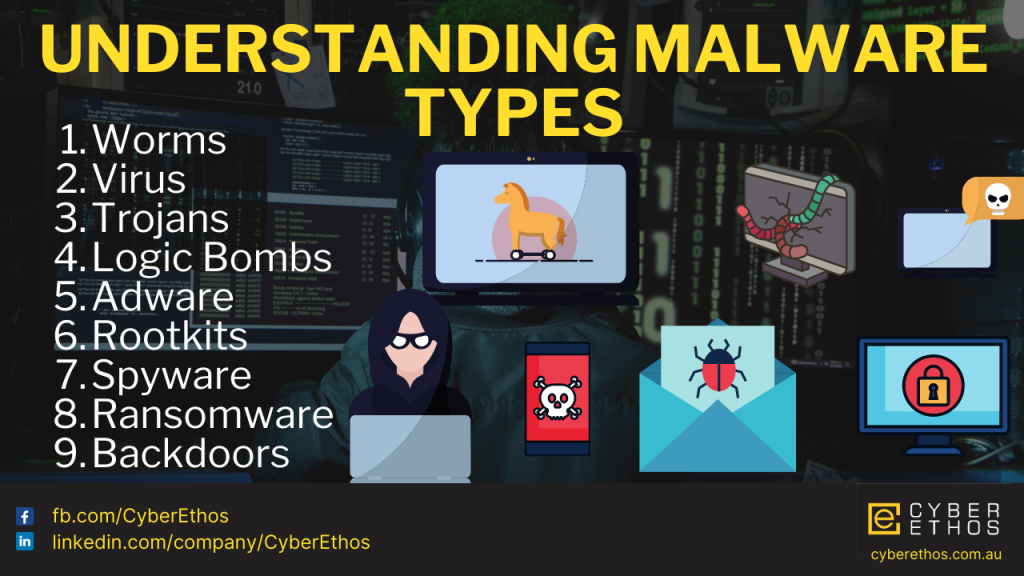
Malware, a contraction of “malicious software,” is any program created with the express purpose of damaging, exploiting, or gaining unauthorized access to computer systems or networks. Malware comes in a variety of forms, each with a unique function and set of traits. Here are a few prevalent malware types: Viruses: When safe programmes or files […]
What’s the impact of quantum computing on encryption and data security, and how should we prepare for it?

Quantum computing has the potential to significantly impact encryption and data security due to its capacity to break commonly used encryption algorithms. Quantum computers leverage the principles of quantum mechanics to perform certain types of calculations exponentially faster than classical computers. Here’s how quantum computing affects encryption and data security and what you can do […]
How can we establish a robust incident response and disaster recovery plan in the event of a cyberattack?
Establishing a robust incident response and disaster recovery plan is crucial for minimizing the impact of a cyberattack and ensuring business continuity. Here are the steps to help you create an effective plan: Define Objectives and Scope: Clearly define the objectives of your incident response and disaster recovery plan. Determine the scope of the plan, […]